 DC Motor B2B
How to Choose a Mini Gear Motor in 2026?
Choosing a Mini Gear Motor in 2026 requires more than comparing torque, price, and package size. The decision begins with the machine’s real working conditions.
Recent outlooks from Grand View Research and MarketsandMarkets identify robotics, medical equipment, factory automation, and compact consumer devices as important growth areas for small motor systems. These reports also highlight efficiency, quieter operation, precise control, and reliable integration as continuing design priorities. However, broad market data cannot select a motor for your application. It only shows where demand is moving.
As Eugen Elmiger, former CEO of maxon, has stated, “The drive system is the heart of every robot.” That principle applies to every compact mechanism. A Mini Gear Motor must match the load, speed, duty cycle, voltage, gearbox ratio, shaft arrangement, and available space. It should also survive heat, vibration, dust, and repeated starts.
Small does not mean simple.
For example, a motor turning a camera module may need smooth low-speed motion. A conveyor actuator may need higher starting torque and longer duty cycles. Using the same motor for both applications would be an expensive mistake. Engineers should check rated torque, stall torque, backlash, noise, efficiency, encoder compatibility, and expected service life. Supplier test data matters, but field experience matters too. Published figures may use ideal conditions.
That is where this guide needs caution. No universal “best” Mini Gear Motor exists. The correct choice depends on measured loads, operating habits, and acceptable failure risk. The following sections explain how to compare specifications, verify supplier claims, and avoid choosing a motor that looks suitable only on paper.
What Is a Mini Gear Motor and How Does It Work?
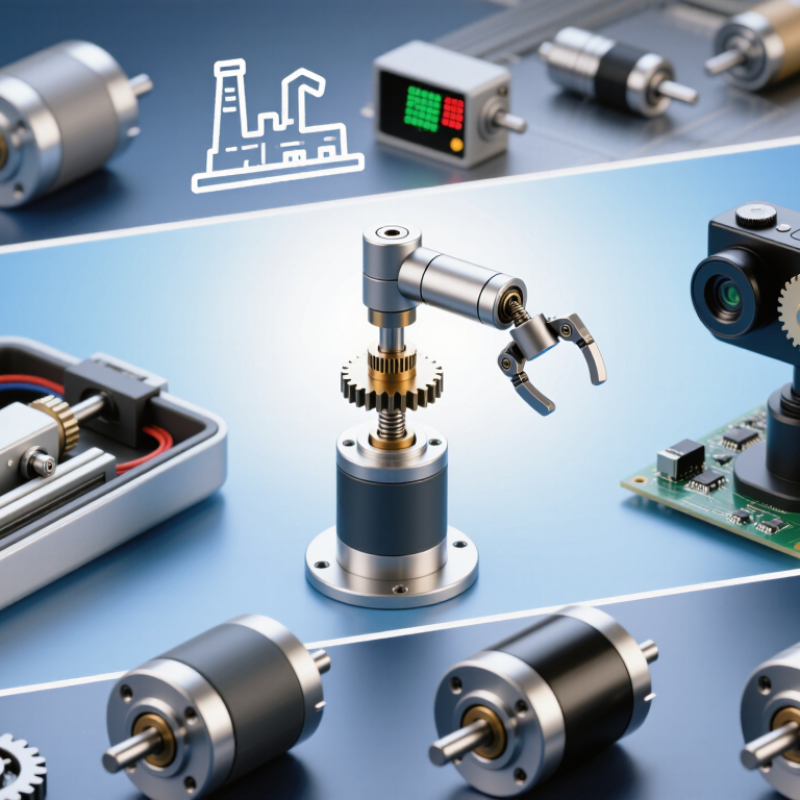
A mini gear motor is a compact electric motor joined to a gearbox. The motor creates rotation at high speed. The gearbox reduces speed and increases usable torque. Small gears transfer motion through several stages. Each stage sacrifices speed for stronger turning force.
A typical unit may drive a camera slider, valve, sensor mechanism, or lightweight robot wheel. Its output shaft turns more slowly than the motor shaft. Spur gears offer efficiency and simple construction. Planetary gears provide higher torque in a small space. Worm gears can resist back-driving, but they often lose more energy as heat.
Choosing one in 2026 requires more than checking the advertised speed. Measure the load, starting torque, running torque, shaft direction, duty cycle, and available voltage. A motor rated for 12 volts may behave poorly with unstable power. Leave safety margin, especially when the mechanism starts under pressure. During small-machine testing, I check temperature after repeated cycles, not just after one successful run. My early mistake was sizing the motor for motion alone. The gearbox also needed to survive sudden stops. Noise, backlash, mounting holes, and shaft length matter in real assemblies. A datasheet can look convincing, yet missing stall-current data creates risk. Request test conditions and tolerance details before approving a design. Needlessly oversized motors waste space and energy. Tiny motors can also fail quietly.
How to Choose a Mini Gear Motor in 2026? - What Is a Mini Gear Motor and How Does It Work?
| Selection Dimension | Typical Data or Range | What It Means | Recommended Selection Guidance |
|---|---|---|---|
| Definition | A compact electric motor integrated with a reduction gearbox | The motor produces rotational power, while the gearbox reduces speed and increases output torque. | Choose a gear motor when the application needs controlled speed and higher torque in a compact package. |
| Operating Principle | Motor speed is reduced through one or more gear stages | For an ideal gearbox, output speed decreases approximately in proportion to the gear ratio, while torque increases by the same ratio before losses. | Use the required output speed and torque to determine the gear ratio, then allow for efficiency and service margin. |
| Common Motor Type | Brushed DC, brushless DC, or stepper motor | Brushed DC motors are simple and economical; brushless motors offer longer life; stepper motors provide positioning control. | Select brushed DC for basic intermittent motion, brushless DC for long operating life, and stepper motors for controlled positioning. |
| Typical Supply Voltage | 3 V, 6 V, 12 V, 24 V, and 48 V DC are common ranges | The motor winding and control electronics must be compatible with the available supply voltage. | Match the nominal voltage to the system power supply and verify the allowable voltage tolerance. |
| Output Speed | Approximately 5–1,000 rpm for many miniature geared applications | Output speed depends on motor speed, gear ratio, load, and supply voltage. | Choose a rated speed close to the working speed; excessive throttling can reduce efficiency and increase heat. |
| Gear Ratio | Common miniature ratios range from about 5:1 to more than 1,000:1 | A higher ratio generally provides lower speed and higher torque, but may increase size, backlash, and transmission losses. | Use the lowest ratio that meets the required torque and speed to improve efficiency and dynamic response. |
| Continuous Output Torque | Approximately 0.005–5 N·m for many mini gear motor designs | Continuous torque is the torque the motor can deliver without exceeding its thermal limit under specified conditions. | Select a motor with continuous torque above the calculated load torque, preferably with a 25–50% reserve. |
| Peak or Stall Torque | Often higher than continuous torque, but usually limited to short periods | Stall torque is produced when the output shaft is prevented from rotating; prolonged stall can overheat the motor or damage the gearbox. | Use peak torque only for brief acceleration or starting events, not as the normal operating point. |
| Gearbox Efficiency | Approximately 50–90%, depending on gear type, ratio, lubrication, and load | Mechanical losses reduce the torque available at the output shaft and generate heat. | Use the manufacturer’s measured efficiency when calculating power consumption and output torque. |
| Gear Technology | Spur, planetary, worm, and helical gear arrangements | Spur gears are economical; planetary gears offer high torque density; worm gears provide high reduction; helical gears can reduce noise. | Prioritize planetary gears for compact high torque, worm gears for high reduction, and spur gears for cost-sensitive applications. |
| Backlash | Commonly about 1°–10° at the gearbox output, depending on construction | Backlash is the angular movement between mating gear teeth when the direction of rotation changes. | Choose low-backlash gearing for positioning, robotics, valves, and applications with frequent direction changes. |
| Duty Cycle | Intermittent, cyclic, or continuous operation | Duty cycle indicates how long the motor runs and how much cooling time is available between operating periods. | For continuous operation, verify rated continuous torque, thermal performance, and permissible winding temperature. |
| No-Load Current | Typically lower than loaded current; exact values depend on voltage and motor size | No-load current reflects internal friction, gearbox drag, and motor losses without an external load. | Use it to estimate battery drain during unloaded operation and to compare mechanical resistance between designs. |
| Stall Current | Several times higher than normal operating current is common | Stall current is the maximum current drawn when the motor cannot rotate. | Size the driver, wiring, fuse, and power supply to withstand the expected startup or stall current. |
| Noise Level | Often approximately 40–70 dB(A), depending on speed, load, and gearbox design | Gear tooth geometry, bearing quality, housing structure, and operating speed affect audible noise. | For medical, office, or consumer equipment, request noise data measured under defined speed and load conditions. |
| Physical Size | Miniature body diameters commonly range from about 8–42 mm | The available installation space limits motor diameter, gearbox length, shaft size, and connector arrangement. | Check the complete envelope drawing, including shaft, mounting holes, terminals, cables, and rotation clearance. |
| Shaft Configuration | Single shaft, dual shaft, D-shaft, keyed shaft, or threaded shaft | The shaft interface determines how the load, coupling, gear, pulley, or encoder is installed. | Confirm shaft diameter, usable length, flat or key dimensions, radial load, and axial load limits. |
| Environmental Protection | Open, partially protected, or sealed construction; IP ratings vary by design | Ingress protection describes resistance to solid particles and water under standardized test conditions. | For dust, splash, or washdown exposure, select an enclosure with a verified IP rating suitable for the environment. |
| Operating Temperature | Many compact designs operate around −10°C to +60°C, subject to specification | Ambient temperature, load, duty cycle, and heat dissipation affect motor temperature and service life. | Derate torque or improve cooling when operating at high ambient temperature or inside an enclosed housing. |
| Control Method | On/off switching, PWM speed control, closed-loop feedback, or step control | Control electronics regulate speed, direction, position, acceleration, and stopping behavior. | Use an encoder or other feedback device when accurate speed or position must be maintained under changing loads. |
| Typical Applications | Robotics, small pumps, medical mechanisms, automation, locks, dispensers, and compact actuators | Different applications impose different requirements for torque, noise, precision, duty cycle, and environmental resistance. | Define the load profile, movement frequency, installation space, and required service life before selecting the motor. |
FAQS
It combines a small electric motor with a gearbox. The motor spins quickly. The gearbox lowers speed and increases torque. Several gears transfer motion through stages. More torque, less speed.
Each gear stage trades rotational speed for stronger turning force. The output shaft turns slower than the motor shaft. This helps move loads that the motor cannot turn directly. However, efficiency drops during this conversion.
They can drive camera sliders, valves, sensors, and lightweight robot wheels. They also suit compact mechanisms with limited space. Check the actual load before choosing one. Small does not mean weak enough.
Spur gears are simple and usually efficient. Planetary gears provide higher torque in compact spaces. Worm gears can resist reverse movement. They may create more heat and waste more energy. The best choice depends on the mechanism.
Measure starting torque, running torque, speed, voltage, shaft direction, and duty cycle. Check shaft length and mounting-hole positions. Include a safety margin for pressured starts. Empty-running speed can mislead you.
Test the motor under its real load, not only on a workbench. Record input power, output speed, and torque. Run repeated cycles, then measure the motor while warm. One successful run proves very little.
Measure sound at a fixed distance, voltage, and load. Ask how the published dBA figure was collected. Treat lifespan numbers as estimates, not promises. Heat, gear wear, shocks, and poor alignment can shorten service life. Numbers can look cleaner than reality.
Include controls, energy use, replacement labor, and rejected units. A cheaper motor may become expensive quickly. Request sample approval, inspection records, batch tracking, and failure data. Test three production samples when possible. One sample is not enough.
Conclusion
Choosing the right Mini Gear Motor in 2026 requires a clear understanding of both the application and the motor’s operating environment. A mini gear motor combines an electric motor with a gearbox to reduce speed while increasing usable torque. Begin by defining the required speed, torque, power, duty cycle, load pattern, voltage, and working temperature. These factors help prevent underperformance, overheating, and unnecessary energy use.
Next, compare suitable gear types, motor technologies, and transmission ratios according to precision, efficiency, noise, and load requirements. Check the motor’s dimensions, shaft design, mounting features, materials, and protection rating to ensure reliable installation and operation. Finally, evaluate efficiency, expected lifespan, acoustic performance, total cost, maintenance needs, and supplier reliability. A well-selected Mini Gear Motor should provide stable output, adequate safety margins, and consistent performance throughout its intended service life. Balancing technical specifications with long-term value will help you choose a compact, dependable, and cost-effective solution.
